
Your voice agent just nailed the demo. Natural intonation, perfect pauses, even a little laugh when the caller made a joke. The room is impressed. Your investor is impressed. Your mom shared the video on LinkedIn.
Then a real person calls your client's dental practice. "I need to reschedule my cleaning from Thursday to sometime next week."
The agent pauses. "I'd be happy to help! Let me have someone from our team get back to you."
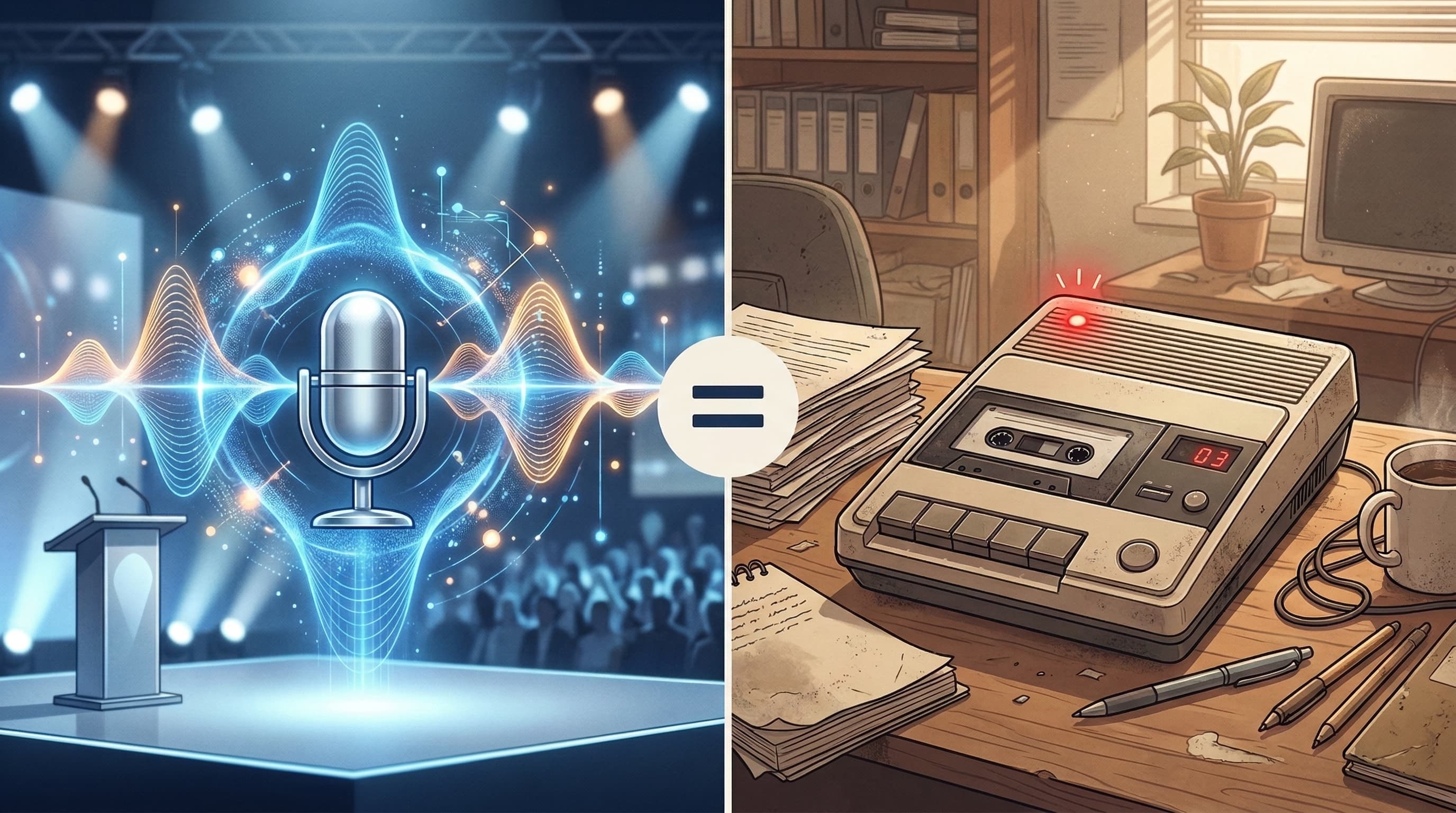
That's an answering machine. A very expensive, very articulate answering machine.
The mouth is solved. The hands aren't.
The voice AI industry has tackled the hardest part of human-computer interaction: making a machine sound like a person. ElevenLabs, OpenAI — the voice is done. Latency is under 600ms. Turn-taking feels natural. You can pick accents, personalities, speaking styles.
What nobody mentions at the demo is what happens when the caller actually wants something done.
"What's available next Tuesday afternoon?" requires checking a calendar in real time, interpreting "afternoon" as a time range, filtering by service duration, and returning options that don't conflict with existing appointments.
"Move my appointment to Friday" means finding the original booking, checking if the requested slot is free, handling the case where it isn't, updating the calendar, and sending a confirmation.
This isn't a conversation problem. It's a transaction problem. And most voice agents can't do transactions.
Why the gap exists
Building a voice agent that talks well is a UX problem. The tools are mature, the APIs are documented. You can spin up a convincing agent on Retell or VAPI in an afternoon.
Building a voice agent that books appointments is an infrastructure problem. You need:
- Real-time calendar reads — not cached, not approximated, real-time
- Conflict detection across multiple staff calendars
- Natural language date parsing ("next Tuesday," "the week after Easter," "sometime in the morning")
- Smart alternatives when the requested slot is taken
- Rescheduling logic that finds the original appointment
- Cancellation flows with confirmation
- Opening hours, holidays, lunch breaks, buffer times between appointments
None of this is glamorous. None of it demos well. Nobody's raising a Series A for "we built really solid timezone handling." But this is where voice agents break in production.
The answering machine test
Here's a brutal thought experiment. Strip away the voice quality, the AI label, the latency numbers. Look only at what your agent does when a caller wants to book.
If the answer is "takes a message and someone calls back" — you built an answering machine.
If the answer is "reads back available times from a static list" — you built a phone tree.
If the answer is "checks the actual calendar, finds a slot, books it, sends a confirmation, and the appointment shows up in your calendar before the caller hangs up" — you built something useful.
The bar isn't "sounds human." The bar is "did the caller hang up with a confirmed appointment?"
What businesses actually measure
No business owner has ever said "our voice agent scored 94% on naturalness." They say "we booked 47 appointments last week without touching the phone."
The metrics that matter:
- Bookings completed without human intervention
- Conversion rate: calls ending with a confirmed appointment vs. "we'll get back to you"
- After-hours captures: bookings from 8 PM calls that would've gone to voicemail — pure incremental revenue
- Rescheduling saves: appointments moved instead of cancelled — revenue retained, not lost
Everything else is vanity.
What "book me in Tuesday at 3" actually requires
Let me walk you through the six steps behind a sentence that takes two seconds to say.
Step 1: Parse "Tuesday." Which Tuesday? This one or next? The caller probably means the upcoming one — unless today is Tuesday, then they mean next week. Unless it's Monday night, then they mean tomorrow. Context.
Step 2: Parse "at 3." 3 PM, presumably. But the business opens at 7 AM. Is this a breakfast place? Then 3 AM makes no sense either. Service context determines the interpretation.
Step 3: Check the service. A 30-minute consultation? A 2-hour deep clean? The slot needs to fit the service, not just be "free."
Step 4: Check the calendar. Is 3 PM actually available? Not just "no events" — available accounting for buffer time before and after, staff assignments, and lunch breaks.
Step 5: The slot is taken. Now what? Suggest 2:30? 3:30? Tomorrow at 3? How far out do you look? Do you offer three alternatives close together, or spread them across the week? Get this wrong and the caller says "forget it" and hangs up.
Step 6: Booked. Add caller name, phone number, service type to the calendar event. Send an SMS confirmation to the caller. Notify the business owner by email.
Six steps. A dozen edge cases per step. Zero tolerance for getting it wrong — a double-booking costs a real business real money and real trust.
This is the work. This is what separates a demo from a product.
The next wave isn't about the voice
The voice AI industry spent three years and billions of dollars perfecting the mouth. Making machines that talk like humans.
Now it needs to build the hands.
The voice is a solved problem. The transaction — checking, booking, moving, cancelling, confirming, and remembering — is where the actual value lives. It's less exciting than a demo reel. It won't go viral on X. But it's the difference between a product businesses pay for every month and a toy that impresses at conferences.
The next wave of voice AI won't be about sounding more human. It'll be about doing more human.